
Your Guide to Combating Seasonal Shedding

As the earth awakens and everything returns to life in spring, our hair often seems to be going through a “recession.”
Many notice a significant increase in hair fall during this season. This is no coincidence; it is a biological response of the scalp to shifting seasons, changes in daylight, and fluctuating humidity levels.
Here are our professional recommendations for maintaining strong roots and reducing hair fall this spring.
I. Identification: Natural Renewal or a Health Warning?
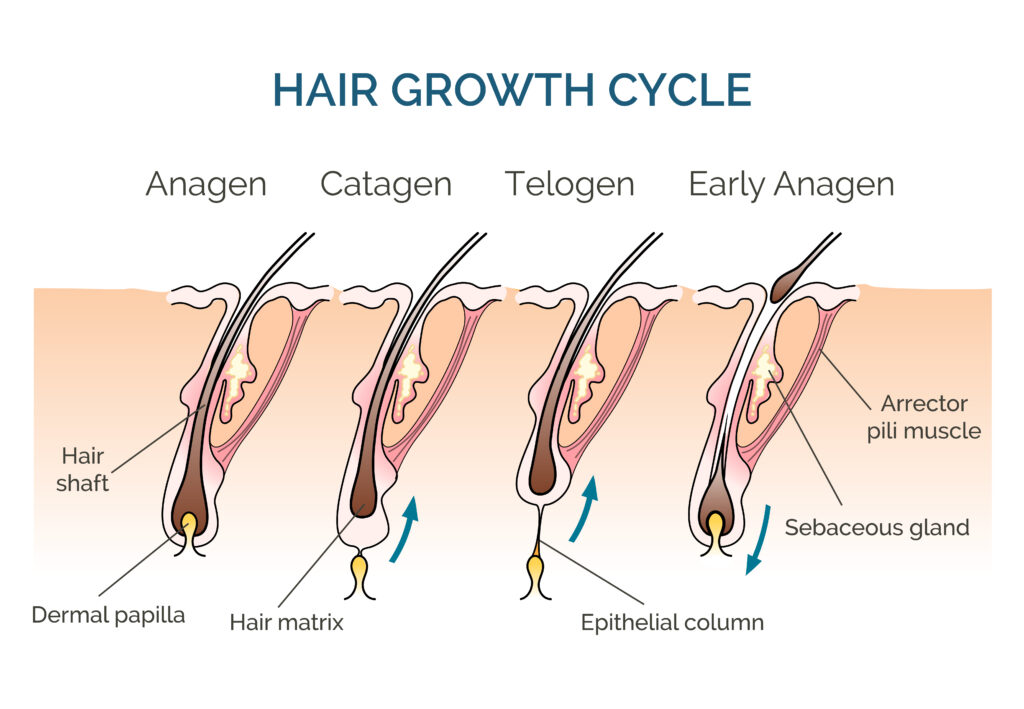
Before beginning your care routine, it is vital to identify what is happening accurately.
Seasonal Shedding: If you find a hair with a tiny white bulb at the root, it indicates that the follicle has completed its growth cycle and is making room for a new strand. This is a normal part of biological metabolism.
Abnormal Hair Loss: If the hair becomes noticeably thinner and softer, or if the shedding is accompanied by persistent scalp redness or itching, it often signals an imbalance in the scalp environment.
II. Precision Washing: Building a Resilient Root Environment
Rising spring temperatures activate sebaceous glands. Improper cleansing is a leading trigger for seasonal hair fall.
- Temperature Control: Lukewarm Water is the Best Shield
We recommend precisely controlling your water temperature between 37°C and 39°C (98.6°F – 102.2°F). Water that is too hot destroys the scalp’s natural lipid barrier, causing compensatory oil production; water that is too cold fails to effectively dissolve grease at the roots.
- The Double-Cleanse Method: Purify, Then Nourish
The First Wash: A quick lather to remove surface dust and environmental pollutants.
The Second Wash: A deeper massage. Leave the lather for 1–2 minutes and use your fingertips to precisely massage the scalp. This not only cleanses but also stimulates microcirculation, delivering more oxygen to the follicles.
- Say No to “Nail Violence”
The scalp is extremely vulnerable when wet. Always use your fingertips, not your nails, to avoid creating microscopic wounds that can lead to fungal infections and exacerbate hair loss.
III. Deep Conditioning: Repair Without Buildup
Humid spring weather causes hair cuticles to open and close frequently, leading to the loss of moisture and protein.
Moisture Management: Before applying conditioner or a hair mask, use a dry towel to press-dry excess water from the hair. If the hair is too wet, the product will be diluted and cannot precisely penetrate the hair shaft.
The “Red Zone”: Hair products must strictly avoid the area within 3–5 cm of the scalp. Product residue clogging the follicles is an invisible killer that causes roots to loosen and fall prematurely.
Physical Detangling: If you must detangle while washing, use a wide-tooth comb. Start from the ends and work your way up in sections—never pull or tug aggressively.
IV. Daily Habits for Spring Loss Prevention
- Scalp “Breathing” Time: Reduce tight ponytails or buns. The scalp is sensitive in spring, and excessive tension can lead to traction alopecia.
- Balanced Intake: Increase your intake of protein, zinc, and iron to provide the essential building blocks for new spring growth.
- Friction Reduction: Consider switching to silk or satin pillowcases. Dry spring air can create static in cotton fibers, increasing friction and leading to breakage.
Conclusion
Spring shedding is a necessary part of the life cycle. While we cannot stop the turning of the seasons, we can ensure that every strand grows back stronger through precise temperature control, scientific massage, and meticulous barrier protection.